
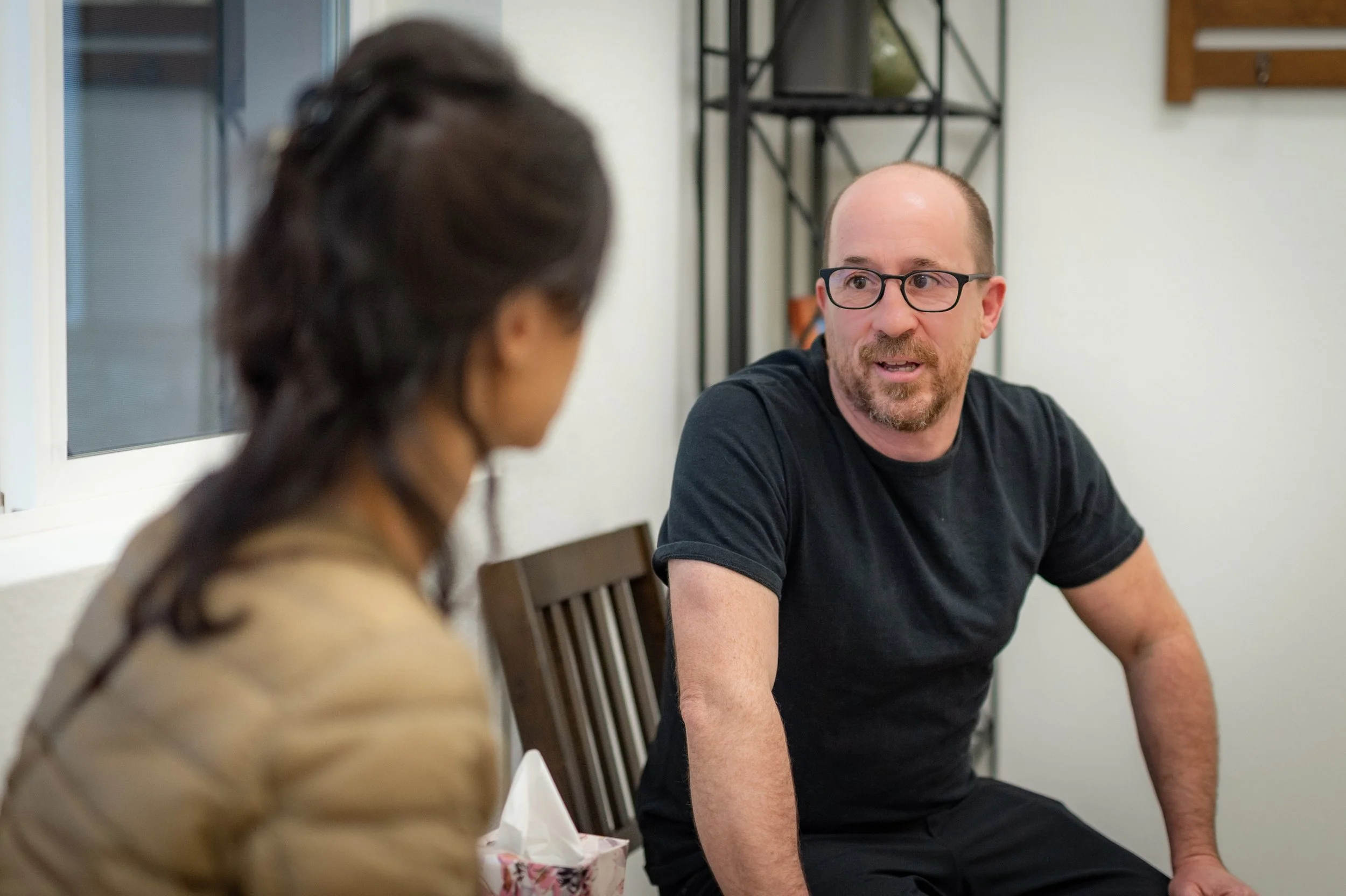
You've been told to live with it. You don't have to.
Peripheral neuropathy treatment in Sequim, WA — for patients who want their feet back.
Most of the people who come to me with neuropathy are in their 60s, 70s, or 80s. They've been to their doctor. Maybe they've had nerve conduction testing — which, by the way, doesn't tell us much about whether you can be helped. They've been told some version of "this is just how it is now."
What they actually want is to walk again. To go outside. To trust their balance. To stop being afraid of falling.
That's where I start.
What neuropathy feels like when you walk in here
It's usually one of three things:
Numbness. You can't feel your feet the way you used to. Balance is off. You're cautious about stairs, about uneven ground, about walking in the dark.
Tingling or buzzing. Constant, distracting, worse at night.
Pain. Burning, shooting, electric. Sometimes worse at rest than when you're moving.
Some people have all three. Some have idiopathic neuropathy — meaning nobody knows why it started. Some have it from chemotherapy. Some from diabetes. The cause matters for how I treat you, but it doesn't determine whether you can get better.
What treatment actually looks like
I use a protocol developed by the Acupuncture Now Foundation specifically for peripheral neuropathy. Five points on each leg. Three on each arm if your hands are involved.
A session looks like this: needles in, gentle manipulation, then 25 minutes of rest while the treatment works. I come back, manipulate the needles again, and we check in on what's shifting. Alongside the neuropathy protocol, I'm always doing Five Element acupuncture — treating you, not just your feet. Neuropathy doesn't happen in isolation. Sleep, stress, digestion, mood — these are all part of why your nerves are struggling and why they're going to recover.
Most people need somewhere between 4 and 10 treatments. How many depends on how long you've had it and what's driving it.
If you want to understand more about how acupuncture actually addresses nerve damage — the mechanisms, the research, why this protocol exists — I wrote a longer piece on it [here]
What changes, and when
The first thing to shift is whatever sensation is loudest.
If you're numb, you'll start to feel things again — tingling, warmth, awareness of your feet on the floor. That sounds small. It isn't. It's the nervous system coming back online.
If you're in pain, the pain comes down. Sometimes after one treatment. More often after three or four.
I had a patient — a woman in her 70s — walk out of here after a few treatments and tell me she felt like she could go dancing again. That's the goal. Not "managing" neuropathy. Getting your life back.
Who responds well — and what I tell people upfront
Idiopathic neuropathy is usually the most responsive. When we don't know what caused it, there's often less standing in the way of recovery.
Chemotherapy-induced and diabetic neuropathy are more complicated because there are ongoing biochemical issues in the body. That doesn't mean you can't improve — many of my patients with these forms do significantly. It means the work is bigger, and the Five Element side of the treatment matters even more. We're not just calming irritated nerves. We're helping the whole system move again.
What I won't do is promise you something I can't deliver. After three or four treatments, we'll know whether your body is responding. If it is, we keep going. If it isn't, I'll tell you.
What you can do at home: Qi Gong
Acupuncture does the deeper work, but neuropathy responds well to daily attention. I teach my patients simple Qi Gong practices they can do at home — gentle movements, breathing, and a tapping technique that helps stimulate circulation and wake up sensation in the feet and hands.
The research backs this up. Studies on chemotherapy-induced and diabetic neuropathy have shown meaningful improvement in pain and symptom severity when Qi Gong is added to standard care. It's not a replacement for treatment. It's something you can do on the days you're not in my office to keep the work moving.
If you're already a Qi Gong patient, you know I teach two weekly classes at Blue Mountain Yoga in Sequim. If you're new, I'll show you what you need at your first session.
The next step
If you've been told to live with neuropathy, I'd like to talk with you before you accept that.
Free 20-minute consultation. No needles, no commitment — just a conversation about what you're experiencing and whether acupuncture is likely to help.